

Cassette Tape Labels Return in 2026
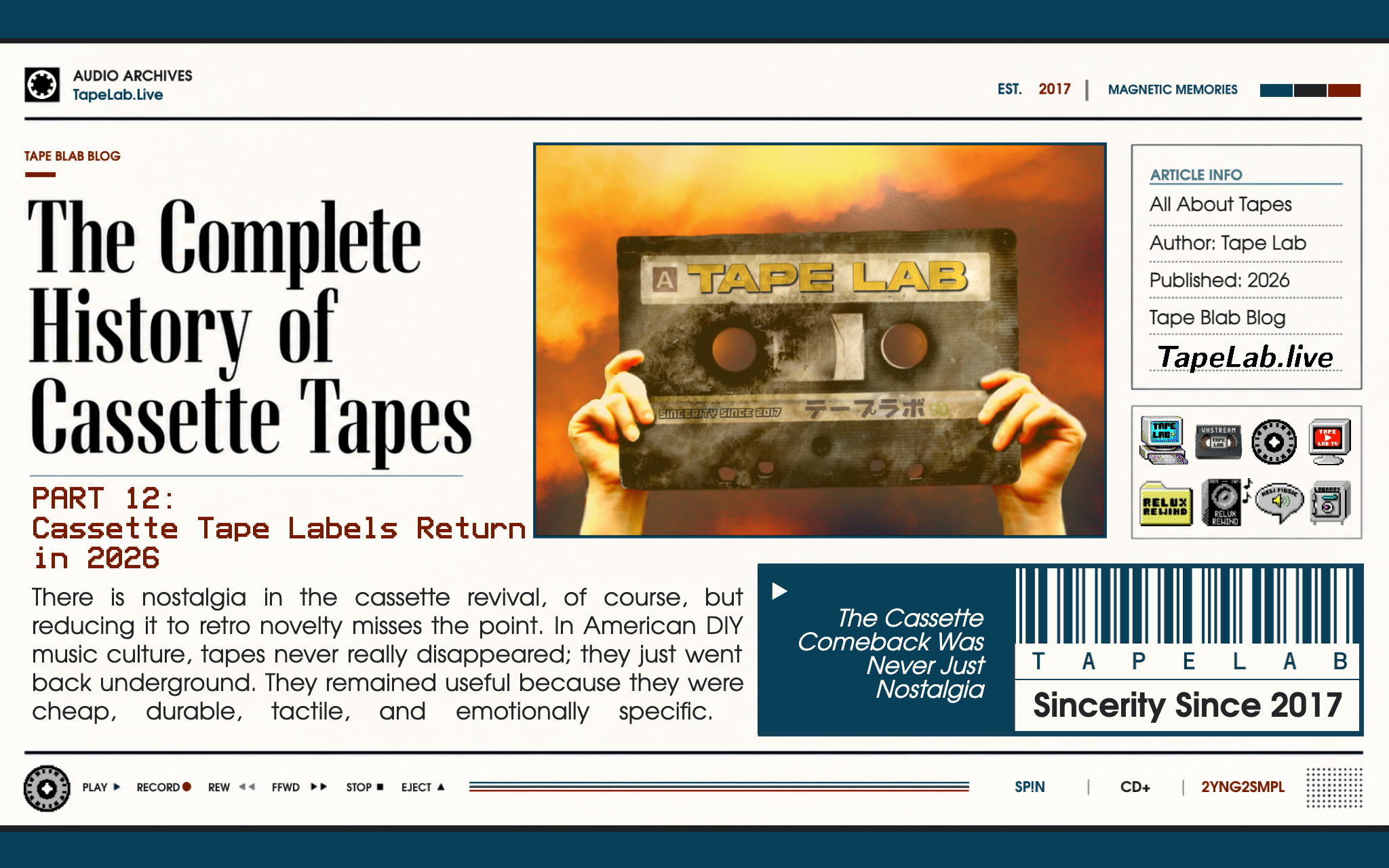
Complete History of Cassette Tapes, Par 12 - Cassette Tape Labels Return in 2026
The Complete History of Cassette Tapes, Part 12
The American Cassette Revival Started Underground
In the United States, the cassette revival found a natural home in indie record shops, DIY labels, merch tables, and small-batch releases. By the mid-2010s, Cassette Store Day had become a U.S. event as much as an international curiosity, with Burger Records helping lead American releases and events, and participating shops turning tapes into limited-run collectibles rather than nostalgia props.
Cassette Store Day and Limited-Run Tape Culture
Special cassette editions also appeared through Record Store Day culture, including small-batch runs like The Taste of Burger Records, a 2013 Record Store Day cassette release limited to 250 copies.
Why DIY Musicians Still Love Cassette Tapes
The appeal was obvious to artists working outside the major-label machine: tapes were affordable, fast, physical, and flexible. National Audio Company, based in Springfield, Missouri, has described the cassette’s comeback as beginning with independent labels and bands around 2010, noting that tapes allowed artists to release music in limited runs more quickly and at lower cost than many other formats.
More recently, KCUR reported that National Audio works with more than 5,000 independent labels annually, which says plenty about how deeply tapes remain tied to grassroots music culture in the U.S.
SP!N, co-founder of Tape Lab loves recording music on tapes because the format keeps the music physical, imperfect, and alive. ‘Tape makes you commit to the sound,’ says SP!N. ‘You hear the hiss, the pressure, the little accidents — and that’s where the personality comes from.’
Tapes as Objects: Why Physical Music Still Matters
For Tape Lab, that practicality is only part of the story. The cassette is not just cheaper than vinyl or more collectible than a download; it changes the relationship between artist, listener, and object. “A tape feels like something that actually entered the world,” says Tape Lab’s co-founder, CD+.
A Format Built for Small Runs and Strange Sounds
That physicality is exactly why tapes continue to make sense for underground labels and artists. A cassette release can be intimate, limited, handmade, and direct. It does not need to be pressed in huge quantities or polished into mass-market perfection.
For Tape Lab, the format rewards the opposite impulse: small runs, strange sounds, imperfect surfaces, original artwork, and personality.
The Cassette Comeback Was Never Just Nostalgia
There is nostalgia in the cassette revival, of course, but reducing it to retro novelty misses the point. In American DIY music culture, tapes never really disappeared; they just went back underground. They remained useful because they were cheap, durable, tactile, and emotionally specific.
Tapes Sound Alive
“Tapes involve effort,” says 2yng2smpl. “You have to make them. You have to listen with a little patience. You hear the hiss, the drag, the machine. That imperfection is not a problem. That is the sound of something being alive.”
About The Complete History of Cassette Tapes
The Complete History of Cassette Tapes is Tape Lab’s 12-part guide to cassette tape history, from magnetic recording and the Walkman to mixtapes, bootlegs, tape duplication, underground labels, and the modern cassette revival.
Read the full 12-part series:
Part 2 - Origins of Audio Tape
Part 3 - Portable Music Comes First from Tape
Part 4 - Underground Tapes Help Artists Make Money
Part 5 - Legality of Tape Duplication
Part 6 - Cassette Tapes vs. Communism
Part 7 - Bootleg Cassette Tapes and the Rise of Tapers
Part 8 - The Cassingle (Single on Cassette)
Part 9 - Cassettes as Cult Classics
Part 10 - Tape-Based Genres Trending in 2026
Part 11 - The History of Tape Magazines
Part 12 - Cassette Tape Labels Return in 2026
