

The History of Cassette Tapes
The Complete History of Tapes, Part 1: Early History
The Complete History of Cassette Tapes, Part 1
Early History of Cassette Tape
In 1963, Philips introduced the compact cassette recorder at the Berlin Radio Exhibition, unveiling a small, practical audio format that would eventually reshape how people recorded, copied, shared, and carried music. The cassette was not flashy technology. It was affordable, portable, durable, and easy to duplicate — and those simple qualities made it revolutionary.
How the Compact Cassette Changed Music Forever
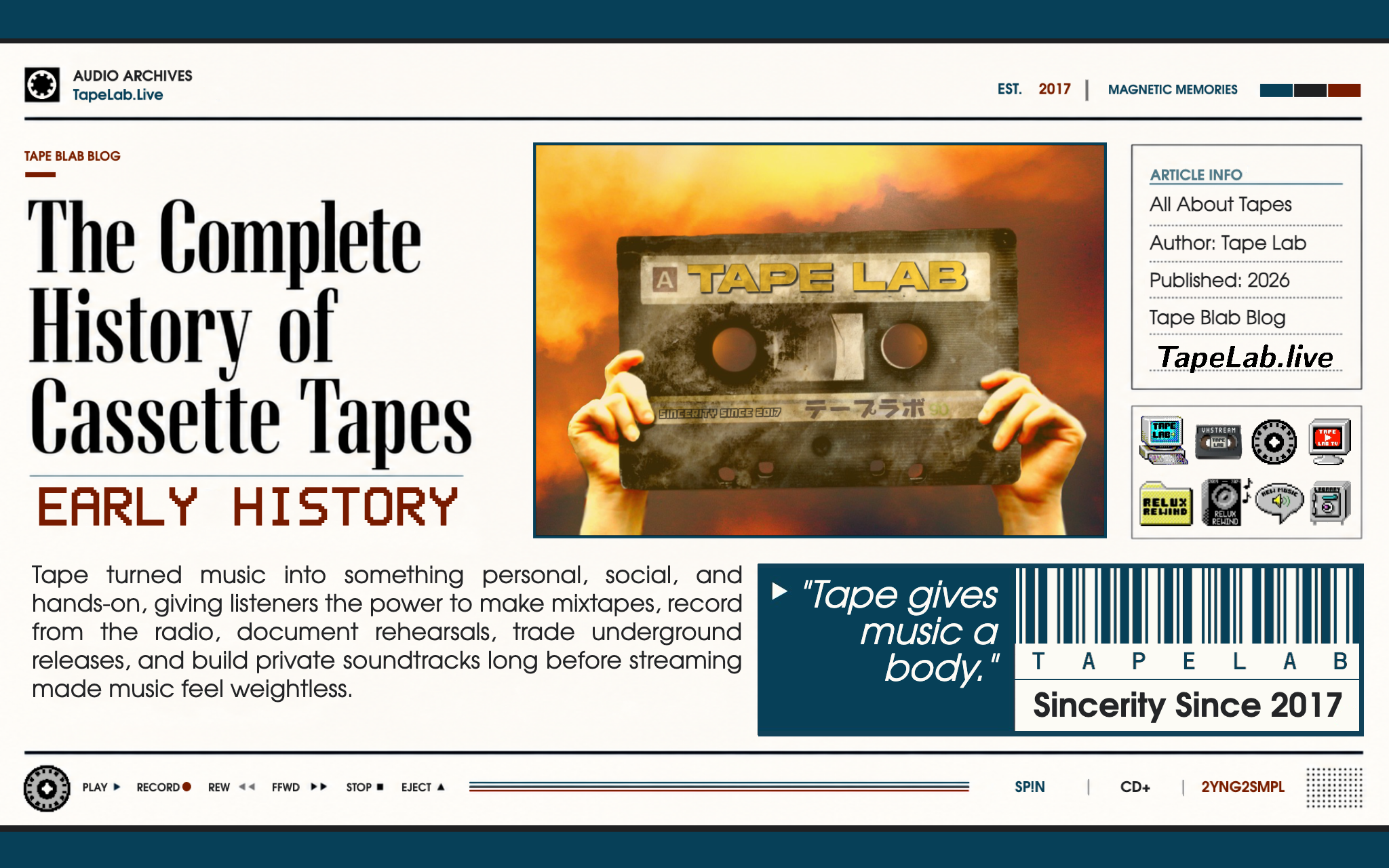
Tape turned music into something personal, social, and hands-on, giving listeners the power to make mixtapes, record from the radio, document rehearsals, trade underground releases, and build private soundtracks long before streaming made music feel weightless.
For a while, the cassette seemed destined to become obsolete. CDs, MP3s, and downloads pushed tape out of the mainstream, and when Sony ended production of the classic cassette Walkman in 2010, it felt like the symbolic end of an era. Wired covered Sony’s discontinuation of the Walkman, framing it as the closing chapter for one of the most important portable music devices ever made.
Why Cassette Tapes Never Really Disappeared
But tape never really disappeared. It stayed alive in DIY music, experimental scenes, punk, noise, hip-hop, bedroom pop, and independent labels that valued the cassette for its low cost, fast production, and tactile appeal. By the 2010s, the format was visible again through Cassette Store Day, an international celebration launched in 2013 to spotlight cassette releases, record shops, and independent labels.
Pitchfork also documented the resurgence, noting how cassette labels remained active in underground music because tapes were accessible, affordable, and culturally specific. Read Pitchfork’s “Secret Music” feature here.
The Cassette Revival: DIY Music, Cassette Store Day, and Tape Culture
That is the real magic of cassette tape. It is not just nostalgia, and it is not only about sound quality. Tape gives music a body. It has spools, pressure pads, handwritten labels, hiss, drag, and the small mechanical drama of pressing play.
For a format that lost the mainstream decades ago, the cassette still captures something digital culture often removes: effort, imperfection, ownership, and the human feeling of holding music in your hand.
About The Complete History of Cassette Tapes
The Complete History of Cassette Tapes is Tape Lab’s 12-part guide to cassette tape history, from magnetic recording and the Walkman to mixtapes, bootlegs, tape duplication, underground labels, and the modern cassette revival.
