

Cassettes as Cult Classics
The Complete History of Cassette Tapes, Part 9 - Cassettes as Cult Classics
The Complete History of Cassette Tapes, Part 9
Tape Lab has long understood the cassette as more than a format. For the underground tape-based media collective, founded by lifelong friends and built across hundreds of releases, the cassette is part object, part sound, part ritual. It is imperfect by design, and that is precisely the point.
“The thing about tapes is that they do not pretend to be invisible,” says Tape Lab co-founder 2yng2smpl. “You hear the machine. You hear the room. You hear the little inconsistencies. That’s not a flaw to us — that’s where the life is.”
That perspective also places Tape Lab inside a larger cassette revival that has never been purely nostalgic. Companies like National Audio Company continue to manufacture and duplicate tapes for artists, labels, and collectors, while modern hardware makers like We Are Rewind have reintroduced portable cassette players for listeners who want the ritual without pretending it is 1986 forever. The point is not that tape is replacing streaming. It is that tapes still solve a problem digital music often ignores: they give independent artists a physical release that feels personal, affordable, collectible, and worth keeping.
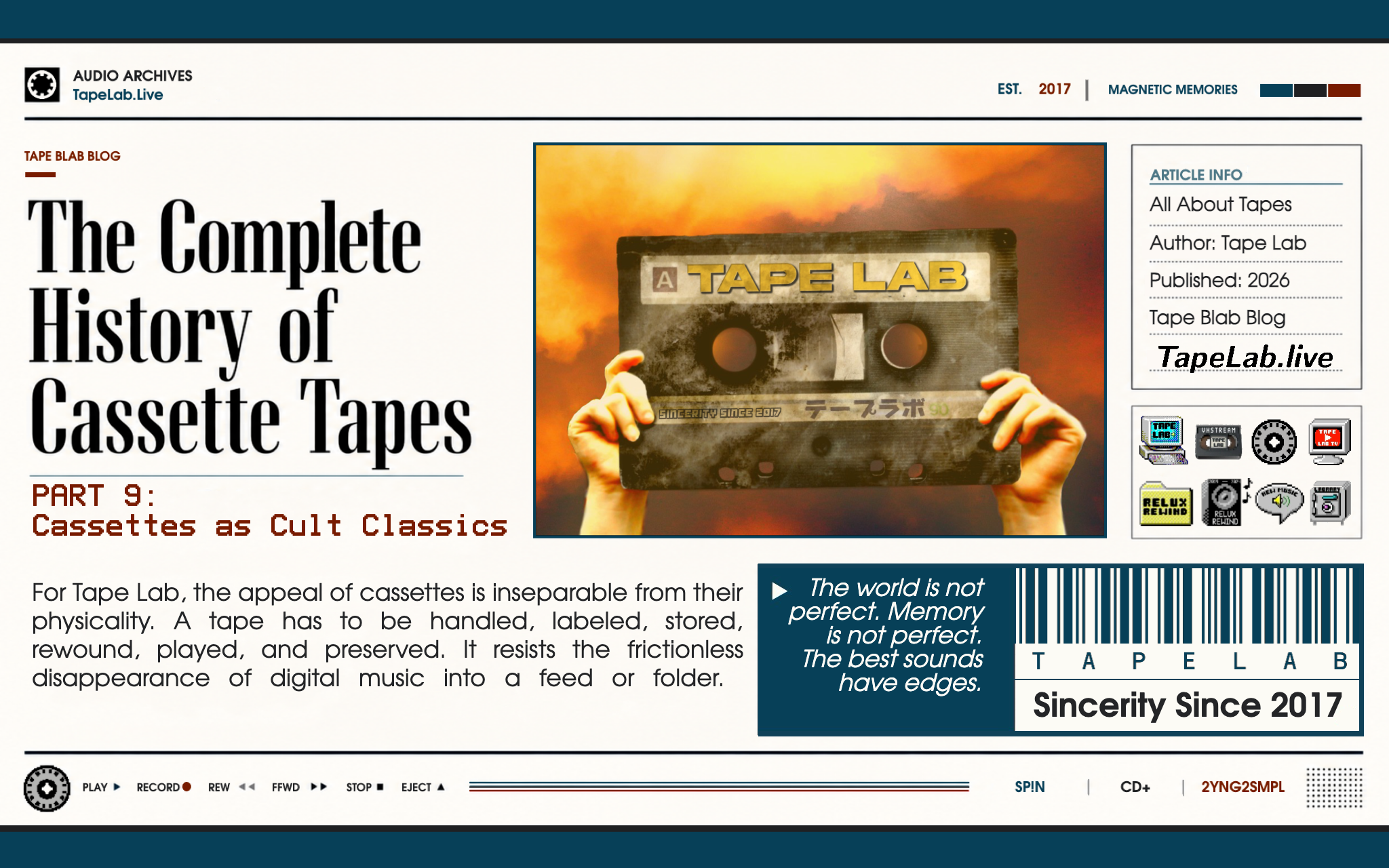
For Tape Lab, the appeal of cassettes is inseparable from their physicality. A tape has to be handled, labeled, stored, rewound, played, and preserved. It resists the frictionless disappearance of digital music into a feed or folder. “A cassette asks something from you,” says SP!N. “You have to touch it. You have to care for it. You have to remember where you put it. That changes the relationship you have with the music.”
That hands-on quality has always been central to Tape Lab’s identity. The artwork, packaging, duplication, sound, and distribution are not afterthoughts; they are part of the release itself. In a music culture often optimized for speed, polish, and convenience, Tape Lab has continued to treat tapes as intimate, material, and defiantly human.
“Perfect sound is overrated,” says CD+. “The world is not perfect. Memory is not perfect. The best sounds have edges. They wobble a little. They degrade. They remind you that someone made this, and someone else is listening.”
That is why Tape Lab’s work belongs as much to cassette culture as it does to music culture. On TapeLab.Live, the releases, videos, writing, artwork, and archive all orbit the same idea: sound should have a story around it. Tape is the perfect medium for that because it carries evidence. It remembers handling, duplication, timing, hiss, room noise, and intention. In that sense, every Tape Lab cassette is not just a copy of the music. It is a small artifact from the moment it was made.
About The Complete History of Cassette Tapes
The Complete History of Cassette Tapes is Tape Lab’s 12-part guide to cassette tape history, from magnetic recording and the Walkman to mixtapes, bootlegs, tape duplication, underground labels, and the modern cassette revival.

