TAPE BLAB BLOG
New Content Every #TapeLabTuesday
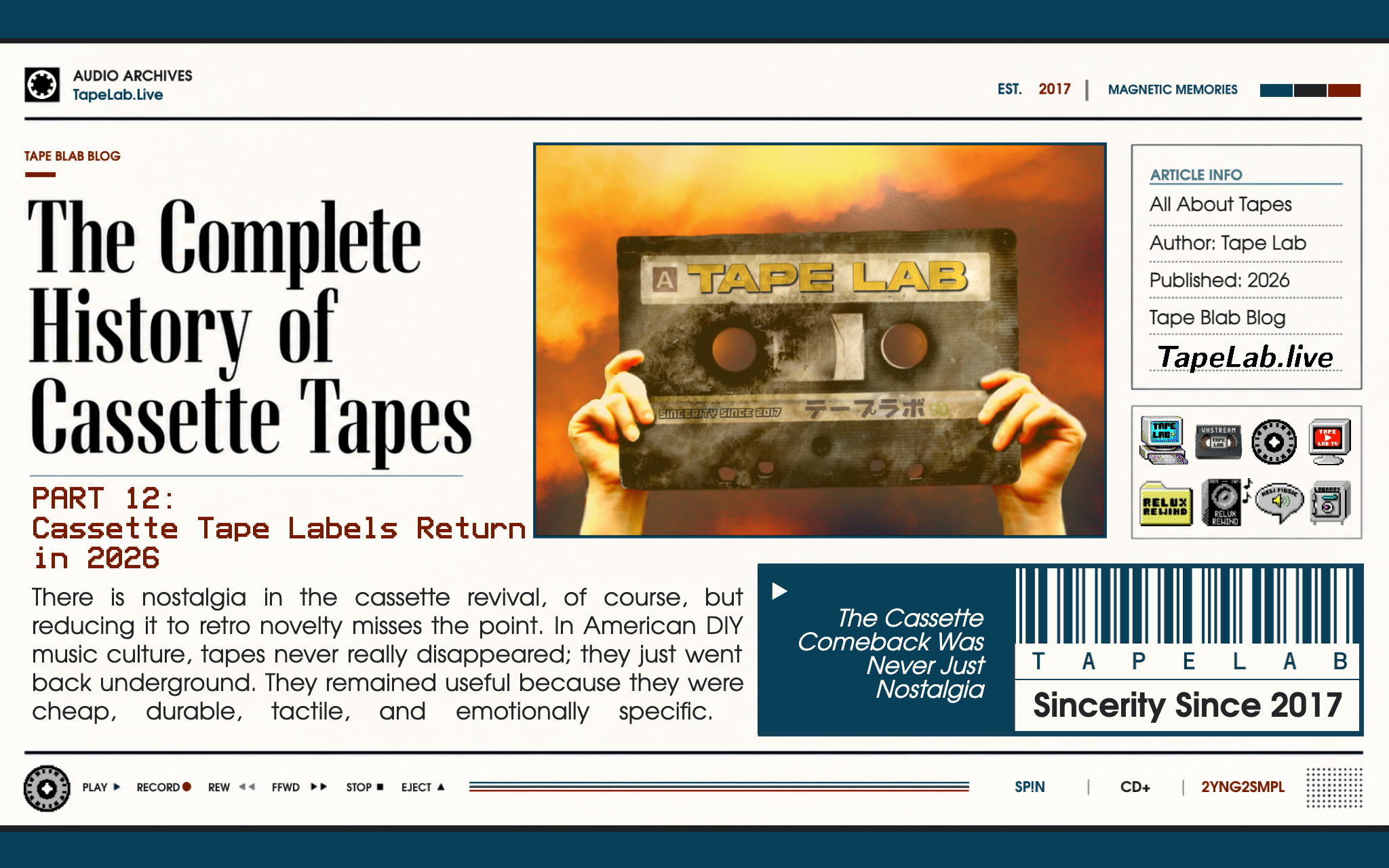
Cassette Tape Labels Return in 2026
Cassette tape labels are having a real moment in 2026, but the comeback was never just nostalgia. From indie record shops, Cassette Store Day, Record Store Day editions, and National Audio Company’s work with thousands of independent labels to Tape Lab’s own tape-based releases, this post explores why DIY musicians still love cassettes: they are affordable, physical, imperfect, collectible, and built for small runs, strange sounds, and music that feels alive.

Tape-Based Genres Trending in 2026
Tape-based music is not just about cassette releases—it is an entire sound world. From vaporwave, lo-fi hip-hop, chillwave, ambient tape music, dungeon synth, noise, industrial, bedroom pop, and punk demos to Tape Lab’s own tapewave style, this post explores how cassette texture continues to shape underground music in 2026. Hiss, wobble, pitch drift, warmth, compression, and decay are no longer flaws; they are part of the emotional architecture.
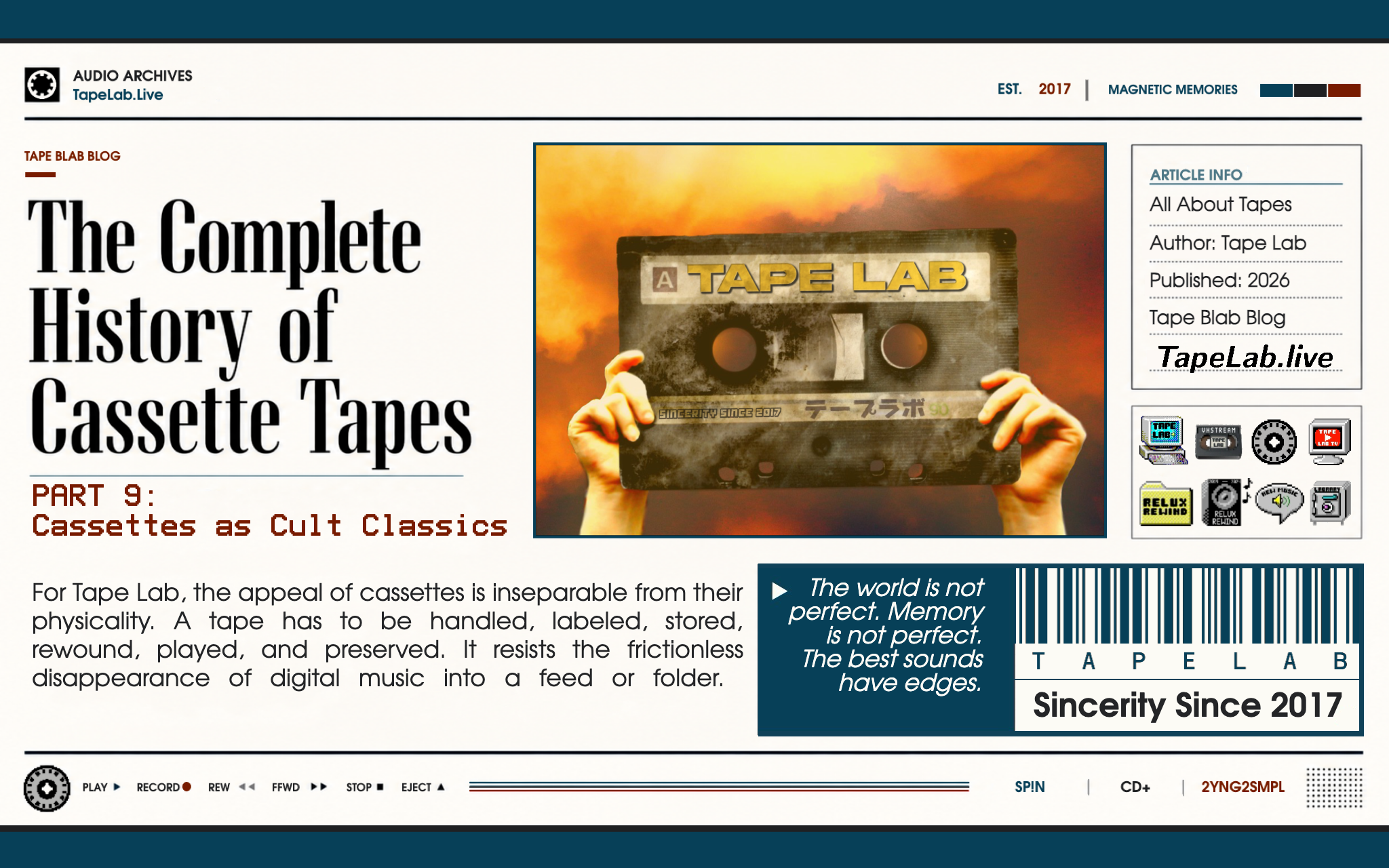
Cassettes as Cult Classics
Tape Lab sees cassette tapes as more than a music format. For the underground tape-based media collective, tapes are physical artifacts: imperfect, personal, handmade, and alive with hiss, room sound, duplication, artwork, and intention. This post explores why cassettes still matter to Tape Lab, and how tape culture gives independent music a body, a story, and a ritual worth preserving.
Live Bootlegs on Tape
Before live recordings were easy to find online, cassette tapes powered a major underground culture of bootlegs, tapers, fan trading, and flea-market music economies. From Grateful Dead taper sections and Deadhead tape archives to 1990s California bootleg raids, this post explores how cassettes became contraband, collector objects, live-show documents, and a handmade alternative to official music distribution.

Cassette Tapes vs. Communism
In the 1980s, cassette tapes became a powerful underground tool for moving music outside official systems. In Poland under communist rule and across the Eastern Bloc, fans used portable recorders, copied live shows, traded tapes by hand, and helped preserve music that state-controlled channels often ignored or suppressed. This post explores how cassettes became a workaround for censorship, scarcity, and gatekeeping—and why tape culture mattered from Jarocin Festival to American punk, hip-hop, noise, and DIY scenes.
Legality of Tape Duplication
Is it legal to duplicate a cassette tape in the U.S.? This post breaks down the difference between private, noncommercial home taping and unauthorized resale or mass duplication. From the Audio Home Recording Act of 1992 to the broader logic of the Betamax ruling, tape duplication has an important legal distinction: making a personal copy is treated very differently from bootlegging. Tape Lab’s position is simple—duplicate our music, share the sound, just don’t sell unauthorized copies.

Underground Tapes Help Artists Make Money
Cassette tapes gave underground artists a practical way to record, duplicate, sell, and circulate music outside the traditional industry. From Bronx party tapes and punk merch tables to modern cassette releases from They Might Be Giants, Chromeo, Tape Lab, and independent labels, this post explores how tapes became a small but powerful economy built on scarcity, personality, direct fan connection, and physical music people actually want to own.

Portable Music Comes First from Tape
Before smartphones, iPods, streaming, and even the CD boom, cassette tapes made music truly portable. This post explores how tape moved sound into cars, backpacks, bedrooms, and daily life—from early Philips Musicassettes and car cassette decks to the Sony Walkman, mixtapes, and the personal soundtrack culture that still defines how we listen today.

Origins of the Audio Tape
Before the Walkman, the mixtape, or the classic plastic cassette shell, there was magnetic recording. Part 2 of The Complete History of Cassette Tapes traces the origins of audio tape from early magnetic experiments and reel-to-reel machines to Philips’ 1963 compact cassette, showing how tape transformed sound into something recordable, reusable, portable, and deeply personal.
ABOUT TAPE BLAB BLOG
Tape Lab is the leader in cassette-based culture and media — discover everything there is to know about tapes on the Tape Blab Blog! Launched in 2024, the Tape Blab Blog is an up-to-the-minute feed for all things cassette-related. We publish DIY and how-to guides, Tape Lab lore, music videos, official merch drops, and updates on new music and projects.
BLOG CATEGORIES