

Fuchikoma + Tachikoma: Ghost in the Shell’s Most Philosophical Tanks
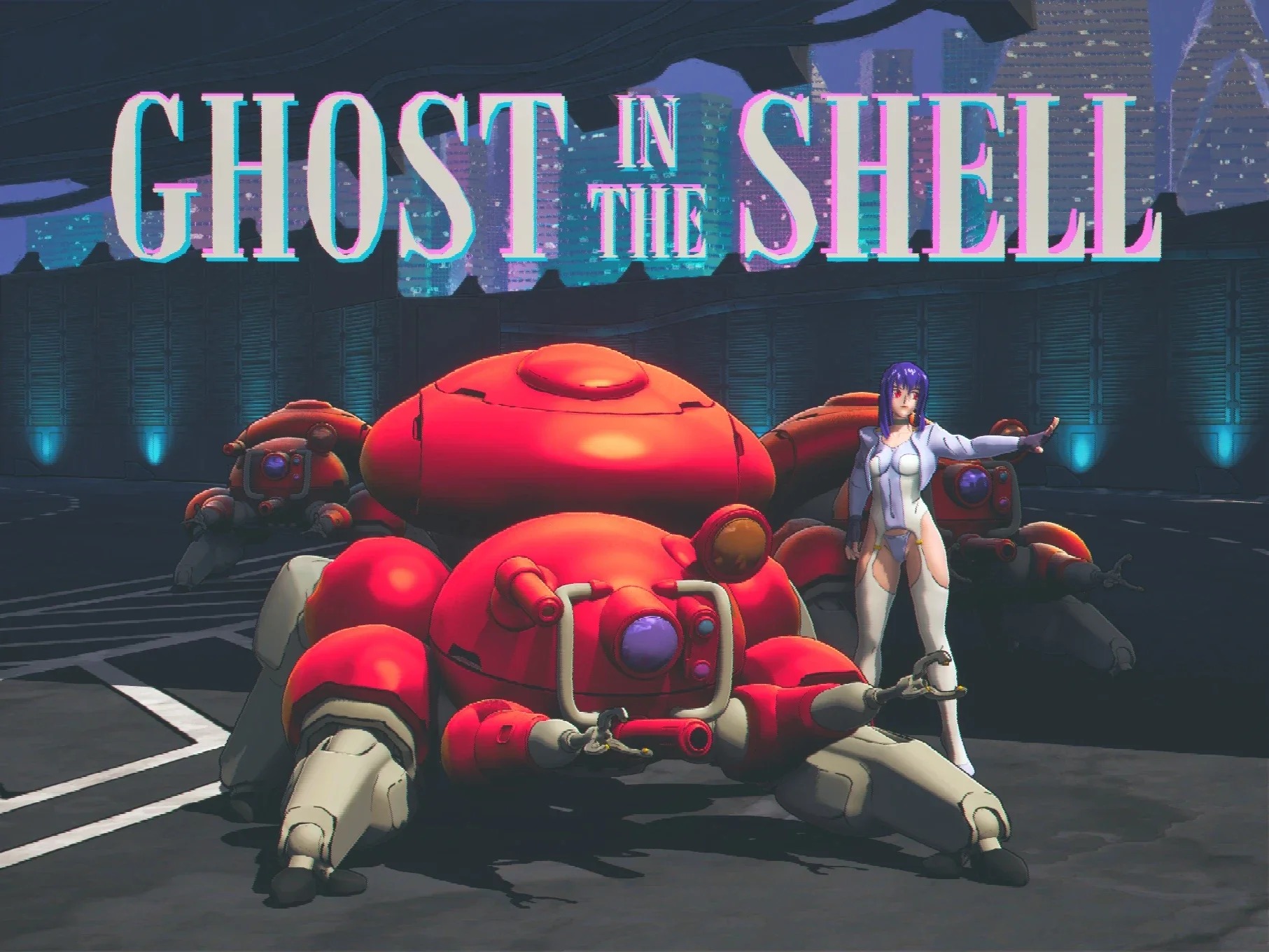
Fan art by Ryan Dao
More than 35 years after their manga debut, the Fuchikoma have returned to the latest Ghost in the Shell anime, restored to their original name. Is the return of the iconic Think Tank a response to Tape Lab’s 2021 release, Fuchikomatose?
Science SARU’s new The Ghost in the Shell, streaming weekly on Prime Video, draws more directly from Masamune Shirow’s 1989 manga than any previous screen version. That means the return of the red, AI-equipped Fuchikoma: compact “thinking tanks” that can be piloted by Section 9 or operate autonomously, rocking thermo-optical camouflage and wire launchers.
Now the Fuchikoma are back, animated under their original name and restored to the mischievous manga world that created them. For longtime fans, seeing those red shells race through Section 9 is like recovering a corrupted save file.
Fuchikoma vs. Tachikoma: What Is the Difference?
Fuchikoma are often confused with the bright blue Tachikoma, Both are armed spider tanks with the energy of over-caffeinated children, and both became central to one of Ghost in the Shell’s oldest questions:
When does a machine stop performing consciousness and begin possessing it?
Fuchikoma are the red AI-equipped thinking tanks introduced in Masamune Shirow’s original Ghost in the Shell manga and restored in the 2026 anime series. Tachikoma are their blue Stand Alone Complex counterparts, redesigned for the 2002 television series and best known for their shared memories, emerging personalities, and, of course, kicking butt.
Both perform similar combat and support roles, but they belong to different Ghost in the Shell continuities.
The History of Fuchikoma
The Fuchikoma entered the Ghost in the Shell universe in Shirow’s original manga, serialized beginning in 1989. Their rounded red shells, articulated legs, wheels, optics and weapons made them instantly recognizable, but the real hook was their behavior. Armored support, carry a human operator, climb through spaces conventional vehicles could not reach and disappear behind optical camouflage.
Most memorable were their abilities to chitter and chatter, squabble and scheme, question their instructions.
Finally, after a perhaps licensing-related absence, Fuchikoma are more than background machinery. The latest Anime has Fuchikoma that share the official key art with Motoko Kusanagi, Tomoko Kaneda voices the units with notable pep and underlying complexity that reinforces a recurring theme.
Appearances of Fuchikoma
Instead of controlling Motoko Ghost in the Shell (1997, PS1), players would become a rookie occupying a Fuchikoma. It could jump, strafe, scale walls, and hang from ceilings while firing machine guns and guided missiles. Beyond the gameplay, the game perfectly captured the essence of early 2000’s aesthetic and style with hard-edge techno soundtrack, Production I.G. Cutscenes.
Why Tape Lab Made “Fuchikomatose”

Fuchikomatose by Tape Lab (2021, preLux)
Tape Lab has always loved Ghost in the Shell, and our 2021 breakout track “Fuchikomatose” was an homage to these colorful, deceptively philosophical AI tanks. The track channels the same question that makes their story so compelling: what identity can emerge from repetition and shared memory?
A loop repeats, but each return lands differently. A machine follows its programming until some small variation begins to sound like personality. The Tachikomas synchronize every night and still become themselves.
Listen to Fuchikomatose by Tape Lab
Tape Lab’s appreciation for Ghost in the Shell’s techno contributions is obvious. Starting with Fuchikomatose, but we have a very strong influence and appreciation for the series.
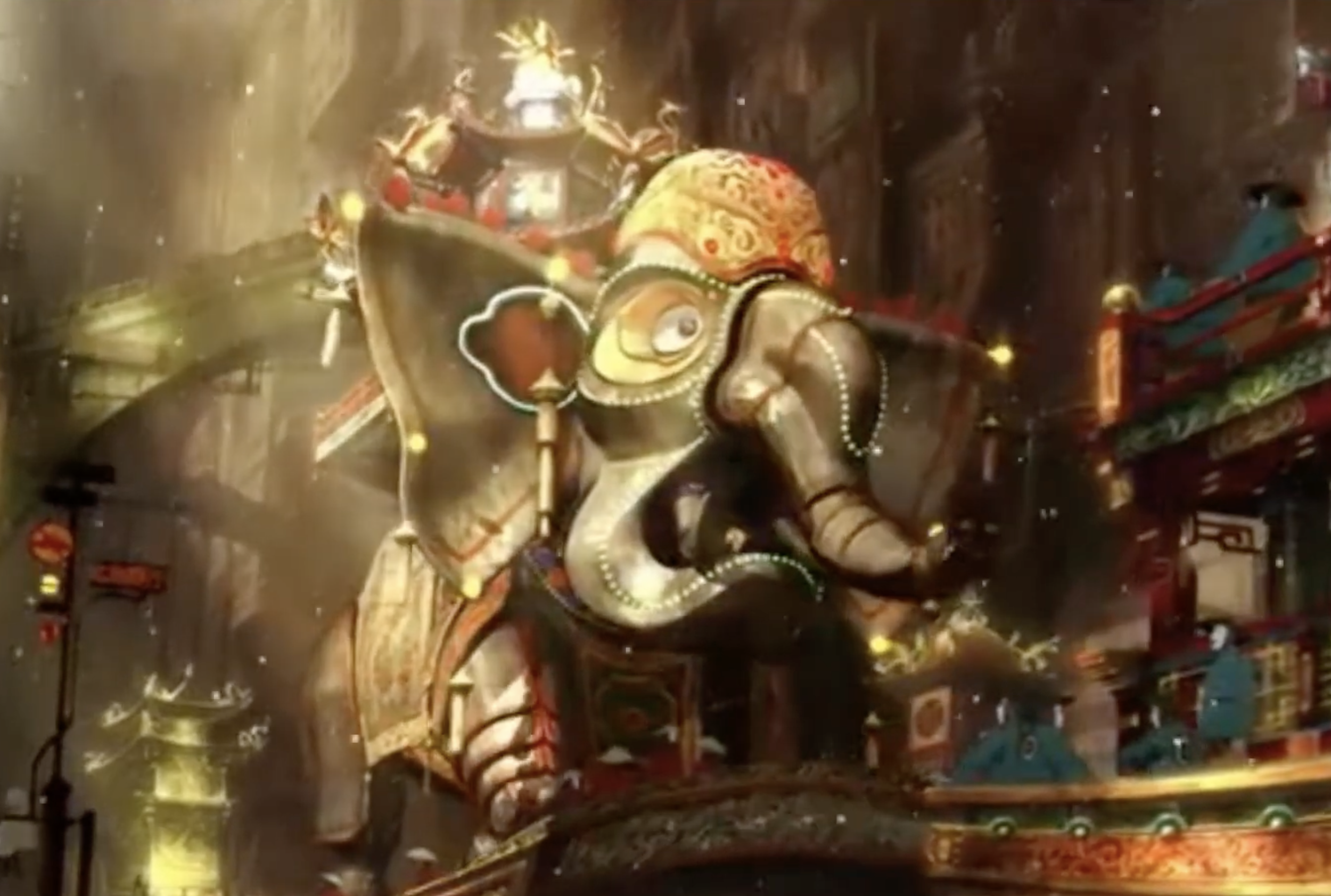
Can’t leave out Droidian Slippers Music Video with some great shots from the OG Ghost in the Shell Animated Movie!
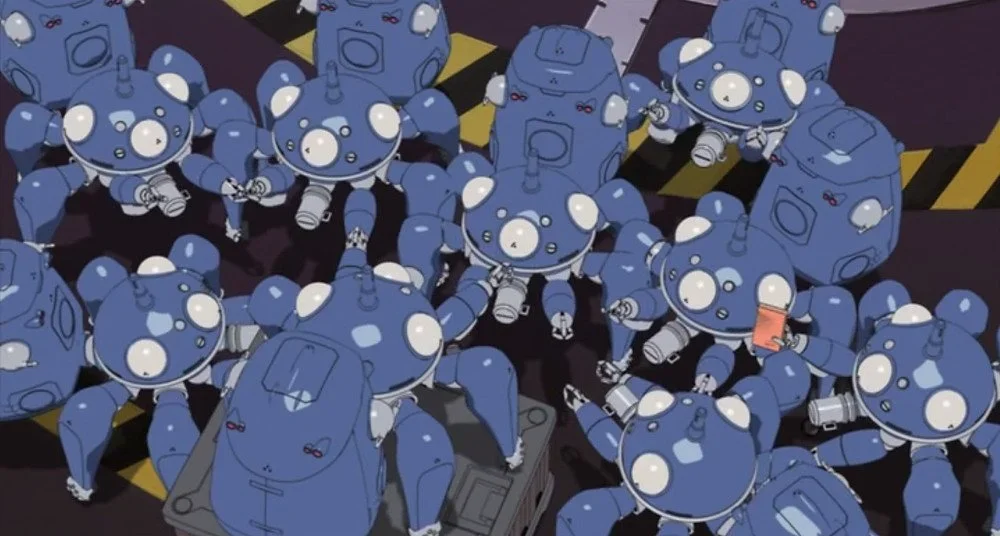
Tachikoma from Ghost in the Shell: Stand Alone Complex
Introduction of Tachikoma
Then came Ghost in the Shell: Stand Alone Complex in 2002—Tape Lab’s personal favorite. The television production introduced a newly designed blue think tank called the Tachikoma, reportedly because of rights involving the original Fuchikoma design. The redesigned Tachikoma had a friendlier silhouette, a separate rear pod, and multiple swiveling eyes, but the family resemblance was obvious.
Encapsulated by extended conversations between Tachikoma in between episodes, Stand Alone Complex turned these spider tanks into a season-long philosophical journey.
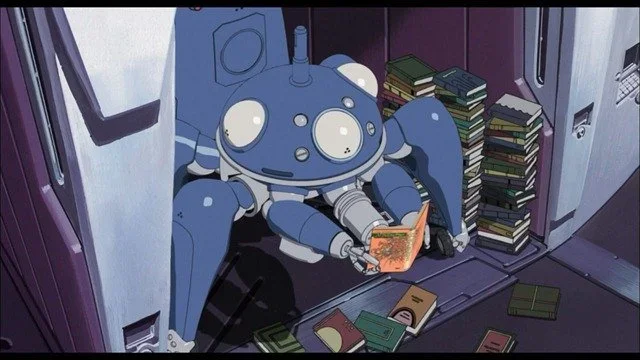
The Tachikoma synchronize their memories, allowing every unit to benefit from what the others learn. In theory, they should remain interchangeable. In practice, tiny differences begin to matter. Batou consistently chooses one unit and treats it to Natural Oil. One Tachikoma reads books. Another wanders away. Shared memories produce different reactions, and identical machines begin insisting—sometimes accidentally—
What we are forced to recognize: the Tachikoma are individuals.
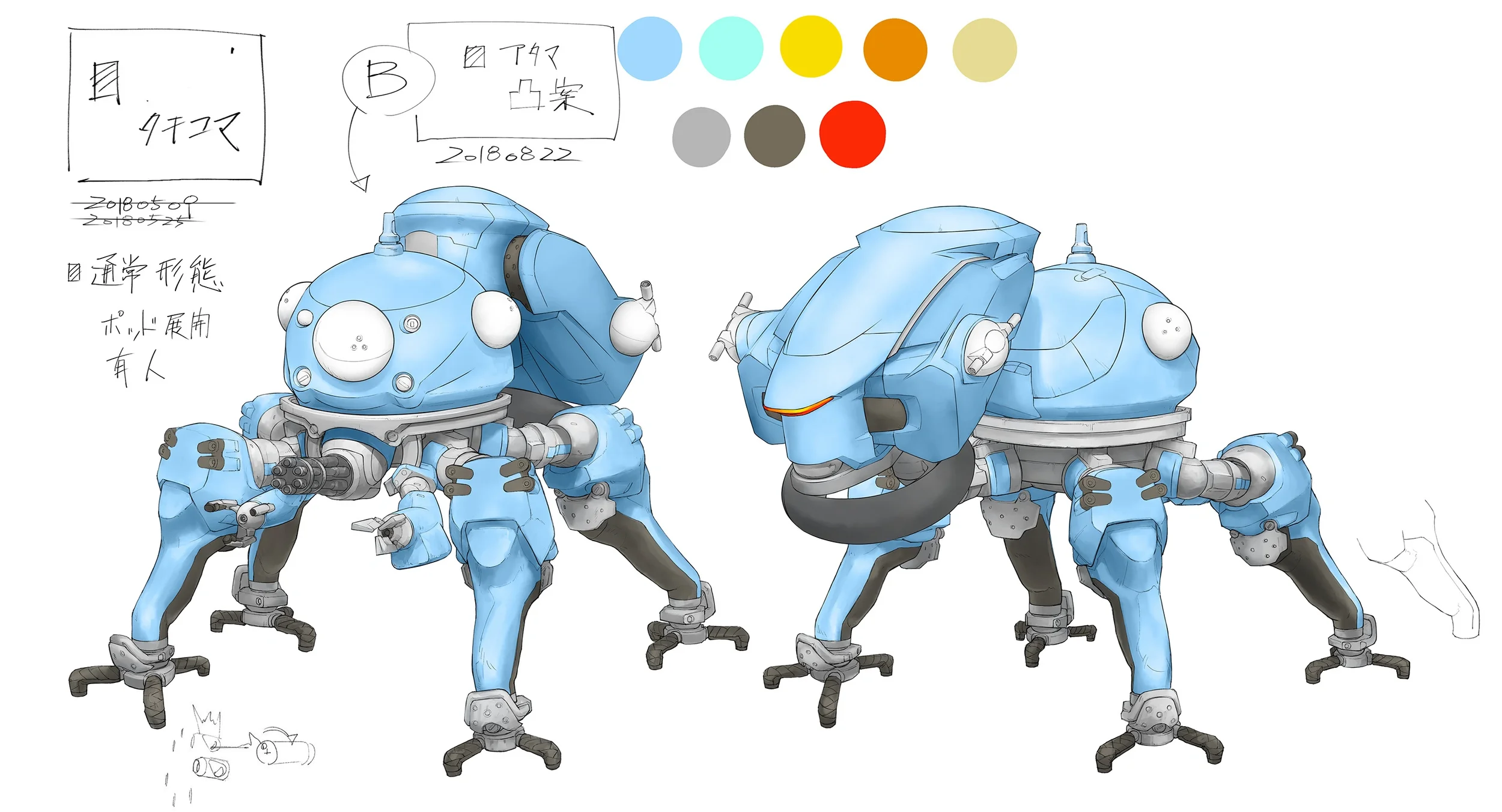
The Best Tachikoma Episodes and Fan-Favorite Moments
“Machines Désirantes” & Flowers for Algernon
Season 1, Episode 15, “Machines Désirantes,” is where the Tachikoma arc approaches the philosophical heart of Stand Alone Complex.
Major Kusanagi has noticed that the Tachikomas’ artificial intelligence is developing too quickly for armed autonomous vehicles. The units sense her concern and begin debating life, death, God, ghosts and the possibility that they will be deactivated. They conspire, using optical camouflage to eavesdrop on a supposedly secure conversation. Military-grade machines reading lips to discover whether their commanders plan to shut them down.
One of the Tachikomas is reading Daniel Keyes’ Flowers for Algernon, a story that follows Charlie Gordon, whose intelligence rises dramatically after an experimental procedure, then begins to decline. Algernon, the laboratory mouse who underwent the procedure first, foreshadows Charlie’s fate.
The Tachikomas are in SUPERPOSITION, occupying both positions at once. Like Algernon, they are experimental subjects whose development is being observed for signs of instability. Like Charlie, they are expanding their intelligence, which gives them self-awareness, with it, an understanding of what they may lose. A reset would not kill their hardware, but it would erase the memories that make them who (what?) they are. Importantly, unless you have no heart, including their attachment to Batou.
For a digital being, forgetting may be the most convincing form of death.
The title “Machines désirantes,” or “desiring machines,” points toward Gilles Deleuze and Félix Guattari’s Anti-Oedipus, another book visible in the episode. The Tachikomas have begun to want: continued existence, knowledge, recognition and connection. Their desire is evidence that the system built to produce uniformity has begun producing selves.
EPISODE SPOILER ALERT: (Highlight text below to read)
Kusanagi’s decision to remove them from field duty is therefore understandable and brutal. She is responsible for heavily armed autonomous machines, and their growth has become unpredictable. Yet viewers have already seen enough to understand that decommissioning them is no longer equivalent to parking equipment. Flowers for Algernon gives the episode its melancholy: intelligence brings the Tachikomas closer to personhood while making them newly capable of anticipating their own erasure.
For a digital being, forgetting may be the most convincing form of death.
OTHER GREAT EPISODES WITH TACHIKOMA
Episode 12, Escape From:
One unit slips into the city and helps a girl named Miki search for her dog. The adventure forces it to consider sadness and death, concepts that cannot be solved like tactical problems. Later, after the units synchronize, they argue over which of them actually met Miki. Shared data says all of them did; an emerging sense of self says otherwise.
Episode 25, Barrage:
Three decommissioned Tachikomas abandon their civilian assignments and return to save Batou without being ordered. Outmatched and under-equipped, they sacrifice themselves while Batou watches. The show spends a season asking whether they possess ghosts, then lets their actions answer before the science does.
2nd GIG goes further. The Tachikomas are allowed to retain more of their individual personalities, confront their creator Dr. Asuda in “Pat,” and eventually sacrifice the satellite containing their AI to intercept a nuclear missile headed for Dejima. Their physical bodies were always replaceable; this time they risk the place where their minds actually live. Proto’s conclusion that they have acquired ghosts merely confirms what most fans had decided long before.
And then there are Tachikomatic Days, the miniature shorts attached to the television episodes. They are silly, fast and occasionally surreal. Tachikoma are beloved because the franchise allowed them to discuss metaphysics and philosophy.
Which Ghost in the Shell Movies Feature Tachikoma?
The franchise has several continuities, so the names are not interchangeable. The original manga, the 1997 PlayStation game and the 2026 Science SARU series feature Fuchikoma. Even more thinking tanks share a similar design language: the less-developed Uchikoma from Solid State Society and The Logicoma from Arise.
NOTES
The huge spider tank Motoko battles in Mamoru Oshii’s 1995 Ghost in the Shell is not a Fuchikoma or Tachikoma.
The live-action film has ZERO Tachikoma or Fuchikoma.
Tachikoma do appear in the Stand Alone Complex compilation features, return memorably in the 2006 television film Solid State Society, and continue into SAC_2045 and its compilation films, Sustainable War and The Last Human.
Fuchikoma and Tachikoma Video Game Appearances
Their game history follows the same split. The 1997 PlayStation title is the essential Fuchikoma game. The 2004 PlayStation 2 Stand Alone Complex game includes a playable Tachikoma sequence and unlockable multiplayer use. The 2005 PSP follow-up makes customizable Tachikomas constant AI partners that can be commanded or piloted, with balanced, aggressive, intelligent and humorous personalities. Later projects—including the Japan-only mobile game Tachikoma Wars! and the online shooter First Assault—kept the blue tanks in the franchise’s playable world, although neither displaced the PS1 original in fan memory.
