

What Is Vaporwave? Welcome to the Internet’s Weirdest Music Genre
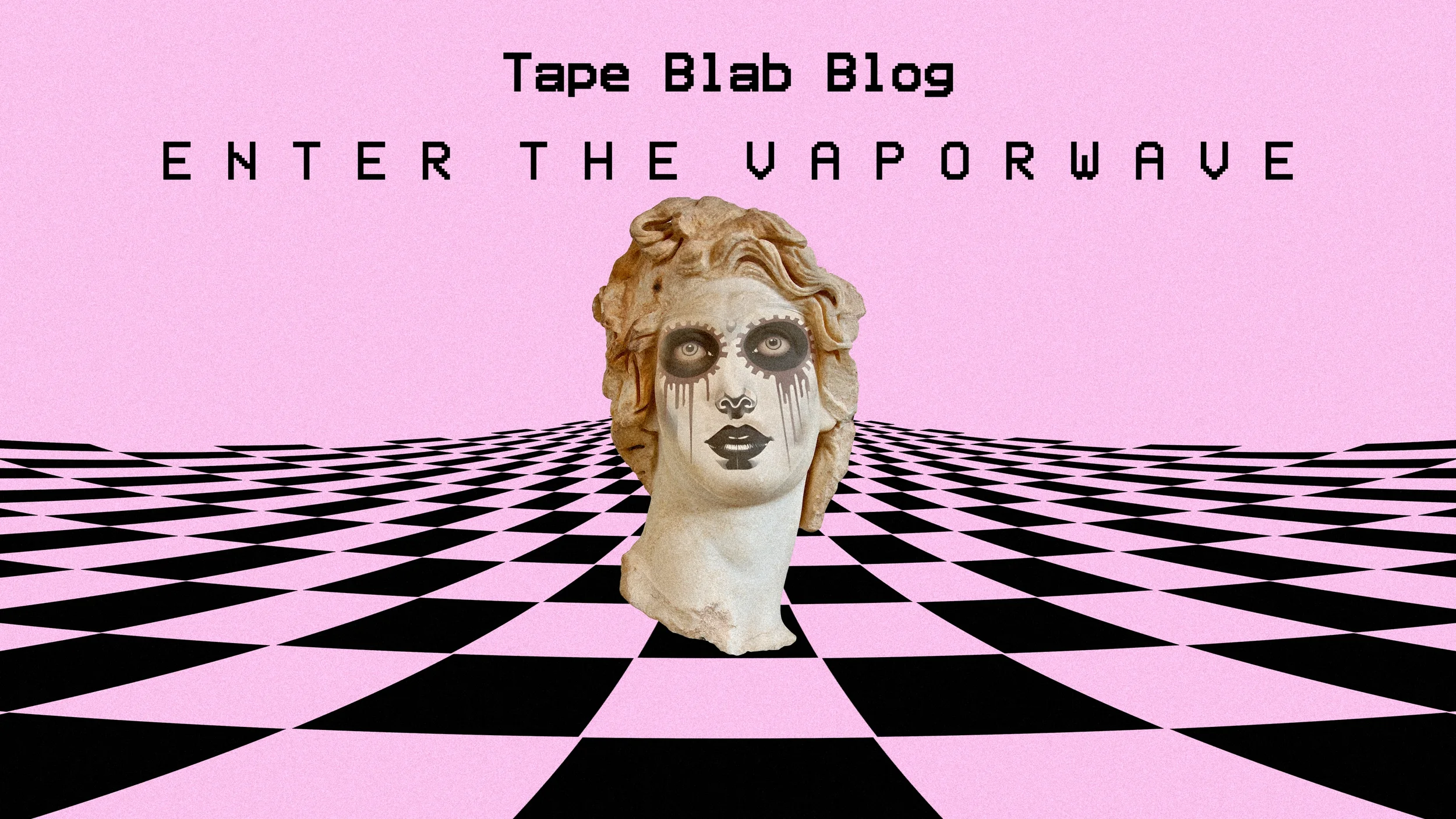
What is V A P O R W A V E
Vaporwave is one of the strangest and most misunderstood genres to come out of the internet - just like us! Vaporwave is music, but it is also an aesthetic. It is nostalgia, but not the simple kind. It is funny, sad, artificial, beautiful, corporate, underground, and intentionally hard to define.
At its core, vaporwave is an internet-born music genre built around slowed-down samples, smooth jazz, elevator music, R&B, corporate audio, 1980s and 1990s media culture, and a deep fascination with obsolete technology. It sounds like abandoned malls, old computers, late-night TV, failed software launches, and hold music from a company that no longer exists. It is both sincere and ironic, which is part of why people still argue about it.
For Tape Lab, that undefined quality has always been the point. We have always appreciated and loved vaporwave because it feels underground in the truest sense: nobody fully owns it, nobody fully controls it, and nobody can completely explain it without making it sound less interesting. Vaporwave lives in the weird space between music, memory, media decay, and internet mythology.
What Is Vaporwave?
Vaporwave is a music genre and visual aesthetic that emerged online in the early 2010s. It is often associated with slowed-down samples, chopped-and-screwed production, lounge music, elevator music, smooth jazz, 1980s pop, early internet imagery, corporate nostalgia, and dreamlike digital decay. Described as both a genre and an internet subculture, which is important because vaporwave has never been only about the sound.
The simplest way to explain vaporwave is this: it takes the background music of consumer culture and turns it into something strange, emotional, and sometimes unsettling.
A song that might have once sounded like a department store commercial, hotel lobby loop, software demo, or corporate training video becomes something else when slowed down, looped, distorted, and placed in a new context. The result can feel like nostalgia, parody, grief, satire, or all of those at once.
That contradiction is the genre’s power. Vaporwave is beautiful because it sounds familiar. It is weird because it refuses to tell you why.
What Does Vaporwave LOOK Like?
The “nobody here” (viewed at the time of writing this 4.7 Million times) video is one of the most instructive places to begin with vaporwave because it captures the genre’s emotional logic in just a few haunted seconds: the mall is empty, the lights are still on, the shops are open, but everything feels abandoned and obsolete.
For Tape Lab, this was an early introduction to the loneliness and existential drift at the center of vaporwave — a loop that feels funny, sad, nostalgic, and spiritually vacant all at once.
Built from a slowed, repeated fragment of Chris de Burgh’s “The Lady in Red,” “nobody here” turns pop memory into a ghost signal, proving how vaporwave uses sampling not just as collage, but as séance. It is consumer culture after closing time: romantic music stripped of romance, digital brightness without warmth, and nostalgia left running on loop until it starts to sound like a warning.
What Does Vaporwave SOUND Like?
Vaporwave usually sounds slow, hazy, looped, artificial, and heavily processed. The classic vaporwave sound often uses samples from smooth jazz, R&B, city pop, New Age, Muzak, corporate music, and 1980s or 1990s pop. These samples are frequently slowed down, pitch-shifted, stretched, chopped, repeated, and covered in reverb.
The sound can be relaxing, but it is rarely just background music. Vaporwave often feels like background music that has become self-aware.
Slowed Samples and Looped Memory
Sampling is central to early vaporwave. Many classic tracks take short sections of older songs or commercial audio and repeat them until the source material starts to feel detached from its original purpose.
A normal pop hook can become ghostly. A smooth saxophone line can turn into an empty hallway. A corporate jingle can become strangely emotional. This is where vaporwave connects with plunderphonics, chopped-and-screwed production, and internet remix culture.
The Sound of Abandoned Malls
One of vaporwave’s most famous moods is the empty shopping mall. Not the mall at Christmas. Not the mall on a Saturday. The mall after the stores have closed, when the lights are still on, the fountain is still running, and some soft jazz loop is playing to nobody.
That feeling became especially important in the subgenre mallsoft, which Bandcamp describes through music that evokes shopping centers, consumer space, and the strange emotional atmosphere of retail environments.
Mallsoft is not just music about malls. It is music about the promise malls used to make: that everything could be clean, bright, climate-controlled, and endlessly available.
Corporate Ghost Music
Vaporwave has a deep relationship with corporate sound. Elevator music, hold music, infomercial backing tracks, product demo audio, and smooth background music all become raw material.
That is one reason vaporwave is often interpreted as a critique of consumer culture. It does not always scream its politics. Sometimes it simply repeats a corporate sound until the promise starts to fall apart.
Tape Lab Makes Vaporwave
Heck yeah, we make Vaporwave at Tape Lab! Check out these great Vaporwave classics by Tape Lab!
The PlayStationary Series is definitely in the vaporwave lane.
Email <3 (a great vaporwave remix of Email my Heart by Brittany Spears)
The Vaporwave Aesthetic
Greek Statues, Dead Malls, and Windows 95 Dreams
You cannot talk about vaporwave without discussing its visual style - the A E S T H E T I C.
The vaporwave aesthetic is one of the most recognizable visual languages of internet culture: pink and purple skies, Japanese text, Greek and Roman statues, palm trees, checkerboard floors, low-resolution graphics, old operating systems, glitch art, chrome logos, anime stills, dead malls, and early web design. Know Your Meme traces the “a e s t h e t i c” style to vaporwave culture, Tumblr, Japanese lettering, and 1980s/1990s computer and video game nostalgia.
The visuals matter because vaporwave is not just heard. It is browsed, downloaded, posted, archived, memed, collected, and rediscovered. Album covers, YouTube loops, Bandcamp pages, and old-school internet graphics are part of the experience.
Vaporwave looks like a memory of the future that never arrived.
A Brief History of Vaporwave
Vaporwave emerged from early 2010s internet culture, but its roots go deeper. It grew out of experimental electronic music, hypnagogic pop, chillwave, plunderphonics, chopped-and-screwed production, and online music communities. It also came from a broader obsession with the recent past: old computers, VHS tapes, malls, corporate branding, Japanese consumer electronics, and the strange optimism of late 20th-century media.
Before Vaporwave: Chillwave, Hypnagogic Pop, and Plunderphonics
Before vaporwave had a name, artists were already experimenting with memory, nostalgia, and degraded pop culture. Hypnagogic pop explored warped memories of past pop music. Chillwave leaned into lo-fi nostalgia, synth haze, and internet-era indie production. Plunderphonics treated existing recordings as material to be transformed.
Vaporwave took pieces of all of these and made something more internet-native, more artificial, and more conceptually slippery.
Eccojams and the Birth of the Sound
A major precursor is Chuck Person’s Eccojams Vol. 1, released by Daniel Lopatin of Oneohtrix Point Never under the Chuck Person name. The album used slowed, looped, and distorted fragments of pop songs to create something hypnotic, funny, and unsettling.
Many vaporwave fans point to Eccojams as one of the genre’s foundational texts. It showed how familiar pop material could become alien through repetition and digital manipulation.
Floral Shoppe and the Moment Vaporwave Became a Meme
If one album became the symbolic center of vaporwave, it was Floral Shoppe by Macintosh Plus, one of the aliases of Vektroid. Pitchfork notes that the album’s samples include Sade, New Age music, Diana Ross, AOR, and Nintendo 64 soundtrack material, all reshaped into a surreal and disorienting world.
The track “リサフランク420 / 現代のコンピュー” became vaporwave’s best-known entry point. For many listeners, it was the first time vaporwave’s sound and aesthetic fully clicked: slowed vocals, glossy nostalgia, Japanese text, retro visuals, and a strange sense that the internet had created a genre out of forgotten background noise.
Bandcamp, Tumblr, Reddit, and the Online Scene
Vaporwave spread through online communities rather than traditional music industry channels. Bandcamp, Tumblr, Reddit, YouTube, SoundCloud, and forums helped define the scene. Artists used aliases, fake corporate identities, anonymous profiles, surreal album art, and extremely specific subgenre tags.
That distribution model mattered. Vaporwave did not need radio. It did not need clubs. It did not need industry approval. It needed a strange album cover, a download link, a looped sample, and the right corner of the internet.
Essential Vaporwave Artists and Albums
This is not a complete list, but it is a strong starting point for anyone trying to understand vaporwave as a genre.
Macintosh Plus — Floral Shoppe
Macintosh Plus is the obvious starting point. Floral Shoppe is the album most people associate with vaporwave, for better or worse. It is also a useful gateway because it captures so much of the genre’s identity: slowed samples, surreal editing, internet mystery, retro-futurist visuals, and meme immortality. It was even reviewed by Pitchfork (8.8 / 10)!
Chuck Person — Eccojams Vol. 1
Chuck Person’s Eccojams Vol. 1is essential for understanding the early vaporwave template. The project is more skeletal and experimental than some later vaporwave, but that is exactly why it matters.
Business Casual 87
This was what got Tape Lab interested in Vaporwave, well before there was even a Tape Lab. Biz Cas has been making vaporwave forever and they cross the full spectrum of genre and style. New releases every friday since 2013. That’s crazy. To get started, we recommend the Anniversary Collections or the BIZC100, which will help you find some great new vaporwave artists.
Tape Lab’s favorite releases from Business Casual 87:
chris††† | eleven eastern | DJ i T u n e s | Future Girlfriend | Pursuing Paradise | BLUNTSIDE | DeLorean.88. | TANE IS LOVE | Polygon Priestess| SYLLABUS | Vincent Remember | マクロスMACROSS 82-99 | generation network | Riverwave
James Ferraro — Far Side Virtual
Far Side Virtual is another key precursor. It leans into digital life, artificial sound, and the cheerful emptiness of modern technology. It is less “classic vaporwave” in the meme sense, but it helped establish the conceptual world vaporwave would inhabit.
Luxury Elite
Luxury Elite represents one of the smoother, more stylish corners of vaporwave. The sound is polished, nocturnal, and deeply connected to late-night television, hotel bars, and glossy 1980s/1990s moods.
Saint Pepsi / Skylar Spence
Saint Pepsi has great commercial appeal and helped push vaporwave toward future funk, a brighter and more danceable offshoot built from disco, funk, city pop, and high-energy nostalgia.
Blank Banshee
Blank Banshee brought vaporwave closer to trap, bass music, and digital maximalism. If early vaporwave sounded like a haunted mall, Blank Banshee sounded like the mall had been uploaded into a video game.
猫 シ Corp.
猫 シ Corp. is one of the defining names in mallsoft and corporate vaporwave. The music often feels like it was recovered from a luxury shopping center, business hotel, or office tower in an alternate timeline.
Infinity Frequencies
Infinity Frequencies explores colder, more ambient, and more fragmented territory. This is vaporwave as signal loss, memory decay, and digital loneliness.
death’s dynamic shroud
death’s dynamic shroud pushed vaporwave into more complex, emotional, and maximalist forms. Their work shows how vaporwave could evolve beyond its initial formulas while still keeping the genre’s strange emotional core.
Vaporwave Subgenres: A Family Tree of Internet Music
Vaporwave fractured quickly into subgenres. Some are serious. Some are jokes. Some started as jokes and became real because that is exactly how the internet works.
Bandcamp’s excellent article, Genre As Method: The Vaporwave Family Tree, From Eccojams to Hardvapour is a useful guide to the genre’s many offshoots, including eccojams, mallsoft, future funk, vaportrap, hardvapour, post-internet, and late-night lo-fi.
Utopian Virtual
Utopian virtual vaporwave leans into bright, synthetic, corporate optimism. It sounds like software demos, airport terminals, luxury tech branding, and instructional videos for a future that never became real.
Slushwave
Slushwave stretches vaporwave into something slower, softer, and more immersive. It is often atmospheric, blurred, and dreamlike, with long tracks that feel less like songs and more like environments.
Barber Beats
Barber beats is one of the more recent vaporwave-adjacent styles to gain attention. It often features smooth loops, lounge textures, jazz-funk samples, and a stylish, fashion-oriented visual world. It is connected to vaporwave but has developed its own identity.
Vaportrap
Vaportrap brings trap drums, bass, and hip-hop production into the vaporwave world. It is more rhythmic and digital, often less dreamy than classic vaporwave, but still rooted in artificial nostalgia and internet aesthetics.
Hardvapour
Hardvapour is a harsher and more aggressive reaction to vaporwave. Where classic vaporwave is slow, hazy, and corporate, hardvapour is faster, rougher, and more industrial. It feels like vaporwave’s angry cousin who left the mall and found a warehouse party.
Eccojams
Eccojams aren’t really a genre, but we have to pay homage to the original vaporwave artist, Chuck Person. The loop is the point. The sample becomes less like a song and more like a memory that cannot move forward.
Mallsoft
Mallsoft is vaporwave’s abandoned shopping center mode. It often uses ambient textures, soft commercial music, reverberated public-space sound, and corporate atmosphere to evoke retail spaces that feel both comforting and empty.
Future Funk
Future funk is one of vaporwave’s most accessible offshoots. It is faster, brighter, and more danceable, often built around disco, funk, city pop, and anime-inspired visuals. If vaporwave is the empty mall at closing time, future funk is the neon-lit arcade that somehow stayed open.
Signalwave / Broken Transmission
Signalwave, sometimes called broken transmission, sounds like fragments of broadcast media drifting in and out of range. Think television IDs, weather reports, commercials, station bumpers, and late-night signals caught on failing equipment.
Naturally, Tape Lab approves of anything that sounds like a transmission from a machine that should have been thrown away in 1998.Vaporwave vs. Synthwave vs. Chillwave vs. Future Funk
Vaporwave is often confused with other retro-leaning internet genres, especially synthwave, chillwave, and future funk. They overlap, but they are not the same.
Vaporwave vs. Synthwave
Synthwave is usually more cinematic, driving, and inspired by 1980s action movies, video games, neon cityscapes, and analog synthesizers. Vaporwave is usually slower, stranger, more sample-based, and more interested in corporate nostalgia, internet decay, and consumer culture.
Tape Lab’s favorite SYNTHWAVE artists: Bl00dwave
Vaporwave vs. Chillwave
Chillwave is dreamy, lo-fi, nostalgic indie-electronic music. Vaporwave shares some of that haziness, but it is more conceptual, more sample-driven, and more tied to internet aesthetics.
Vaporwave vs. Future Funk
Future funk is technically part of the vaporwave universe, but it has a very different energy. It is upbeat, danceable, and often celebratory. Vaporwave can be funny and beautiful, but it is usually more ambiguous.
Is Vaporwave Dead?
People have been declaring vaporwave dead almost since vaporwave became popular. That is part of the mythology.
The phrase “vaporwave is dead” makes sense in one way: the original early-2010s moment cannot be recreated. Once the genre became recognizable, it lost some of the mystery that made it feel so strange in the first place. The old internet is gone. Tumblr is different. Bandcamp is different. The meme cycle moved on.
But vaporwave is not dead. It dissolved into everything.
You can hear its influence in lo-fi streams, mallsoft, barber beats, nostalgic electronic music, internet visuals, YouTube mixes, fashion graphics, retro branding, VHS art, and the broader culture of obsolete media appreciation. The original genre may have mutated, but that is what underground genres do when they are alive.
They refuse to stay still.
How to Make Vaporwave Music
There is no single correct way to make vaporwave, which is good news. The genre gets less interesting when it becomes too rule-bound. Still, classic vaporwave production usually starts with a few recognizable moves.
r/makingvaporwave is an excellent resource.
Start with a Forgotten Sound
Find or create something that feels like lost media: smooth jazz, R&B, city pop, corporate training music, old commercials, stock music, television bumpers, video game menus, hotel lobby music, or public access weirdness.
Slow It Down
Slowing a sample changes its emotional weight. A bright song can become mournful. A cheerful commercial can become eerie. A throwaway background loop can suddenly sound profound.
Loop the Strange Part
The best vaporwave loops usually focus on a moment that feels unfinished: a vocal phrase, keyboard flourish, saxophone line, drum fill, or chord change. Repeat it until it stops behaving like a normal song.
Add Reverb, Delay, Saturation, and Texture
Vaporwave often benefits from space and degradation. Reverb makes it feel larger. Delay makes it feel unstable. Saturation, tape texture, vinyl crackle, or VHS-style noise can push it toward memory rather than clarity.
Check out StephenMcFarlane Design for great VHS assets.
Build the Visual World
In vaporwave, cover art is not decoration. It is part of the release. The fonts, colors, symbols, and imagery tell the listener what kind of strange room they are entering.
Vapor95.com has excellent resources for making vaporwave album art. We have used this many times.
Tape Lab’s LABrary has excellent assets for your - all free!
Why Vaporwave Still Matters in 2026
Vaporwave matters in 2026 because it understood something before everyone else admitted it: obsolete media does not disappear. It becomes emotional.
Old formats, old websites, old commercials, dead malls, expired technology, failed corporate dreams, and outdated design trends all carry cultural residue. Vaporwave takes that residue and turns it into music.
That is why Tape Lab has always loved it. Vaporwave is underground, undefined, and deeply connected to the beauty of media that should technically be obsolete. It treats dead formats as living material. It finds feeling in the artificial. It turns background noise into a world.
Vaporwave is not just a genre. It is a way of listening to the ruins of the recent past.
Vaporwave FAQ
What is vaporwave in simple terms?
Vaporwave is an internet-born music genre and aesthetic that uses slowed-down samples, retro media, corporate music, and 1980s/1990s nostalgia to create a dreamy, strange, and often ironic sound.
Is vaporwave a real music genre?
Yes. Vaporwave is a real music genre, though it is also an aesthetic, meme, and internet subculture. That mix is part of why it can be difficult to define.
Why does vaporwave use Japanese text?
Vaporwave often uses Japanese text because the genre is heavily influenced by Japanese consumer electronics, city pop, anime, imported media, and the Western internet’s fascination with Japanese futurism and design. Sometimes it is meaningful. Sometimes it is purely aesthetic. Sometimes the ambiguity is the whole point.
What is the difference between vaporwave and synthwave?
Synthwave is usually more cinematic, energetic, and inspired by 1980s action movies and video games. Vaporwave is usually slower, more sample-based, more surreal, and more focused on corporate nostalgia, internet culture, and media decay.
What are the best vaporwave albums to start with?
Good starting points include Floral Shoppe by Macintosh Plus, Chuck Person’s Eccojams Vol. 1, Far Side Virtual by James Ferraro, releases by Luxury Elite, Blank Banshee, 猫 シ Corp., and death’s dynamic shroud.
Tape Lab suggests anything by christtt
What is mallsoft?
Mallsoft is a vaporwave subgenre that evokes shopping malls, retail spaces, elevator music, ambient corporate sound, and the strange emotional emptiness of consumer environments.
Is vaporwave still popular?
Vaporwave is not new in the way it was in the early 2010s, but it is still influential. Its sound and aesthetic continue through mallsoft, future funk, barber beats, retro internet art, lo-fi culture, VHS visuals, and underground electronic music.
How do you make vaporwave music?
Start with a sample or sound that feels nostalgic, corporate, smooth, or forgotten. Slow it down, pitch it down, loop it, add reverb or texture, and build a visual world around it. The best vaporwave does not just sound retro. It makes the past feel strange again.
