

Tape Lab’s Artist Influences: Loud Color, Cassette Culture, and Beautiful Visual Chaos
Tape Lab has never been interested in looking polished in the boring way. Our visual world is loud, colorful, strange, and proudly overbuilt. It comes from a lot of places at once: 32-bit video games, Japanese role-playing games, underground music flyers, sci-fi paperbacks, cassette culture, collage art, absurd internet debris, and the specific joy of putting one face over another face.
Tape Lab’s album art is built around contrast: beauty and ugliness, nostalgia and future shock, handmade mess and digital precision, fantasy and cheap plastic, sincerity and total nonsense. We like art that feels alive before it feels perfect.
This post is about Tape Lab’s VISUAL art, not our music. To see more about THE TAPE LAB METHOD, click here.
Video Games, JRPGs, and the 32-Bit Imagination
A huge part of Tape Lab’s visual language comes from video games, especially the 32-bit era. There is something about that period that still feels creatively wide open. The textures were imperfect, the colors were bold, the worlds were huge, and the technology had just enough limitation to make everything feel haunted, stylized, and dreamlike.
Japanese role-playing games are a major influence here. Not just because they look cool, although they absolutely do, but because they understand scale. A single image can suggest an entire mythology: a ruined city, a lonely hero, a glowing sword, a machine god, a forest full of secrets. That sense of world-building is central to Tape Lab.
Our covers often try to feel like they came from a game you remember playing, even if that game never existed.
Some of our favorite samples have come from:
The Soul Calibur IV Narrator, Animal Crossing, Tomba 2, ChronoCross, Final Fantasy VII, Final Fantasy Tactics, The Merchant from Resident Evil 4, Solstice (NES)… to name a few.

PlayStationary One Vol. 1 - Jade Calibur
For more about Tape Lab’s Video game-based music see:
The PlayStationary Story, Part 3
Maximalism, Color, and Controlled Overload
Tape Lab is not afraid of being loud. We use big color, busy compositions, clashing textures, strange figures, and visual density because that is part of the energy. Minimalism has its place, but it is not usually where we live.
Our style is maximalist, but not random. The goal is not to fill space just to fill it. The goal is to create tension, movement, and atmosphere. A good Tape Lab image should make you want to zoom in. It should feel like there is more happening just outside the frame.
We love juxtaposing contrasting images: futuristic shapes with old media, fantasy figures with cassette textures, glamorous colors with grimy details, digital polish with analog damage. Sometimes it works immediately. Sometimes it takes hours. Sometimes it takes days. Sometimes the best idea happens in five minutes and makes everything else look overthought.
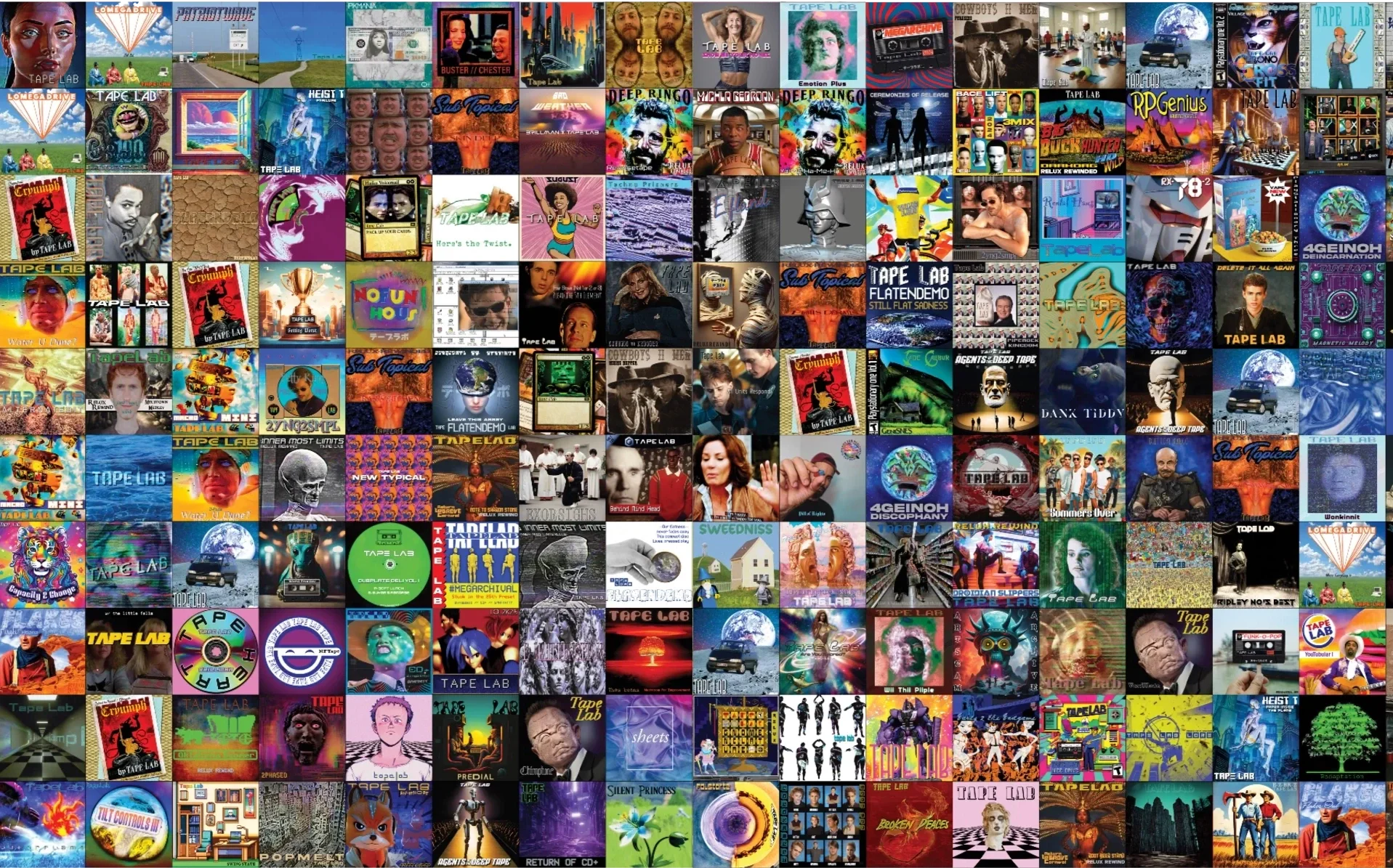
A collage of Tape Lab Album Art
Cassette Imagery and Tape-Based Visual Culture
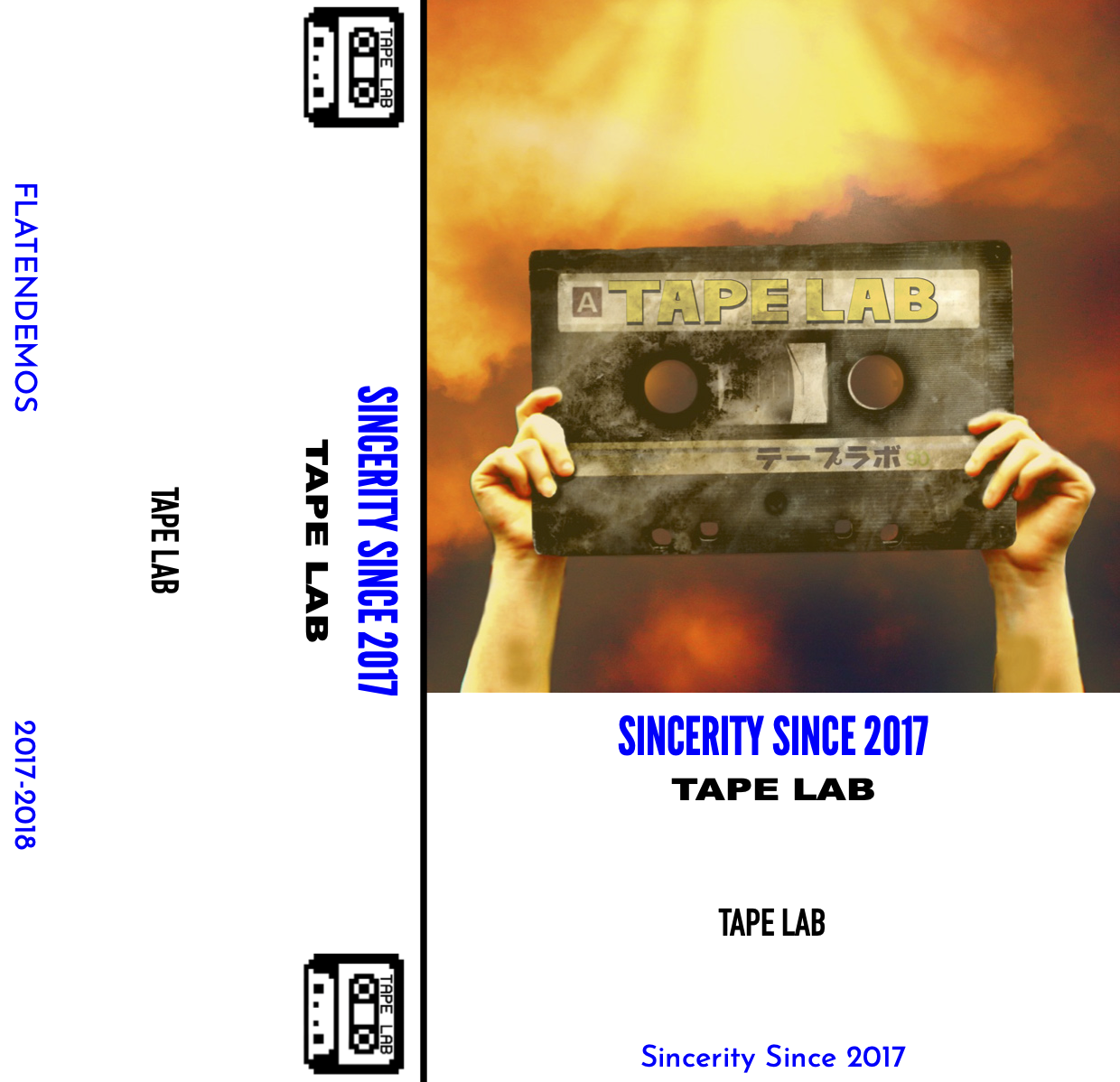
Cassette Tape Cover Templates: A Simple DIY Guide
Cassette imagery is central to Tape Lab because tapes are central to Tape Lab. We love the physical language of the format: the reels, windows, labels, plastic shells, handwritten marks, J-cards, stickers, cases, and strange little manufacturing details that make every tape feel like an object from a specific world.
A cassette is already a piece of design. It has symmetry, function, nostalgia, and mystery built into it. We use tape-based imagery because it connects the music, the artwork, and the object itself.
For anyone making their own cassette release, our J-CARD Tape Cover blog post is a useful place to start. Tape art is a critical part of the release.
Barry Windsor-Smith, Otomo, Moebius, and the Lineage of Detail
Some of Tape Lab’s biggest artist influences come from illustrators and comic artists who understood world-building at an elite level. Barry Windsor-Smith is a major influence, especially in the way his work can feel ornate, powerful, elegant, and strange all at once. There is a sense of composition and craftsmanship in his art that rewards close looking.
Katsuhiro Otomo is another huge reference point. His work has a way of making machinery, cities, bodies, and destruction feel both enormous and precise. There is scale, chaos, architecture, and emotional weight. That kind of visual intensity matters to Tape Lab.
Moebius is also part of the conversation: surreal landscapes, impossible worlds, clean lines, sci-fi dream logic, and images that feel calm and alien at the same time. His influence is less about copying a look and more about understanding that art can feel like a portal.
Tape Lab’s visual identity lives somewhere in that space: detailed, colorful, strange, narrative, and not overly concerned with fitting into one category.
CD+ and the Tape Lab Visual Language
CD+ is the real artist visionary behind much of Tape Lab’s visual world. He is responsible for some of our most well-composed and distinctive artwork, and his sensibility gives the project a lot of its personality.
CD+ created our iconic band image with two hands holding a tape like a religious text.
His work brings together underground music, fantasy, sci-fi, collage logic, absurd humor, and a genuine love of visual overload. It can be funny without becoming disposable, ambitious without becoming sterile, and strange without losing emotional pull.
That balance is important. Tape Lab art is not just weird for the sake of being weird. The best pieces have a feeling. They look like album covers, game covers, bootleg artifacts, secret objects, and transmission errors from another timeline.
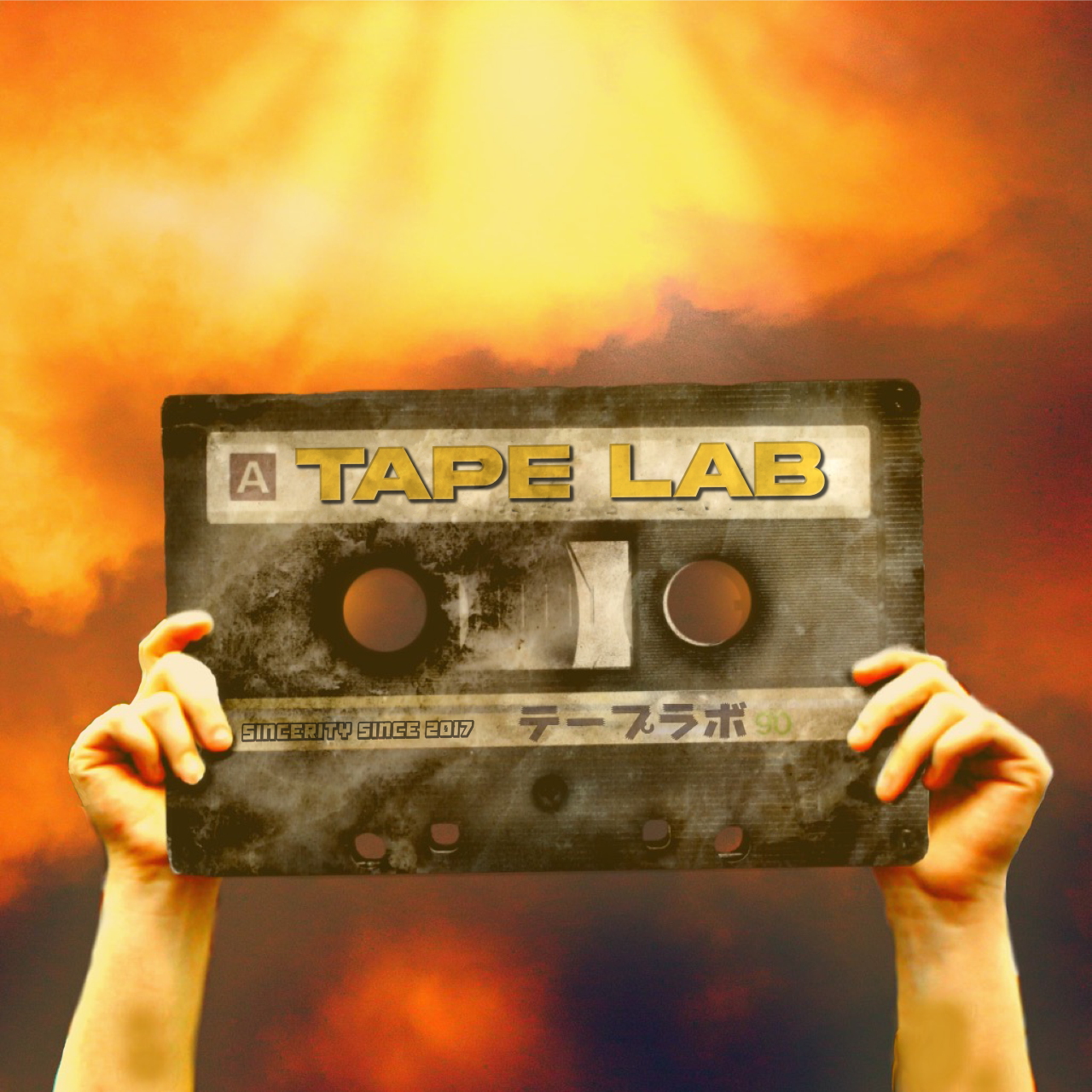
CD+ created the iconic Tape Lab logo in 2017
Making DIY Album Art
We also strongly believe in creating your own visuals. You do not need a massive studio setup to make compelling album art. You need taste, time, curiosity, and a willingness to try things that might look ridiculous before they look good.
We absolutely love recommending Pixlr as a great resource for making DIY album art. It is accessible, flexible, and useful for artists who want to experiment with image editing without getting buried in expensive software.
We also have to give love to 2yng2smpl, a longtime supporter of the Superimpose app on mobile. Superimpose has been a great tool for quick edits, layering, cutouts, face swaps, surreal compositions, and the kind of visual experiments that often become something much better than expected.
Sometimes album art starts as a serious concept. Sometimes it starts with “what if we put this face on that face?” Both are valid.
The Tape Lab Approach
Tape Lab’s artist influences are not about recreating one style. They are about building a visual system that can hold a lot at once: cassette culture, JRPG fantasy, sci-fi absurdity, underground music, loud color, maximalist collage, and a deep affection for strange media objects.
Our album art takes time because it matters. It gives the music a body. It gives the release a world. It gives the listener something to hold onto before they even press play.
