

Julian the Apostate: Last Light of the Old Gods
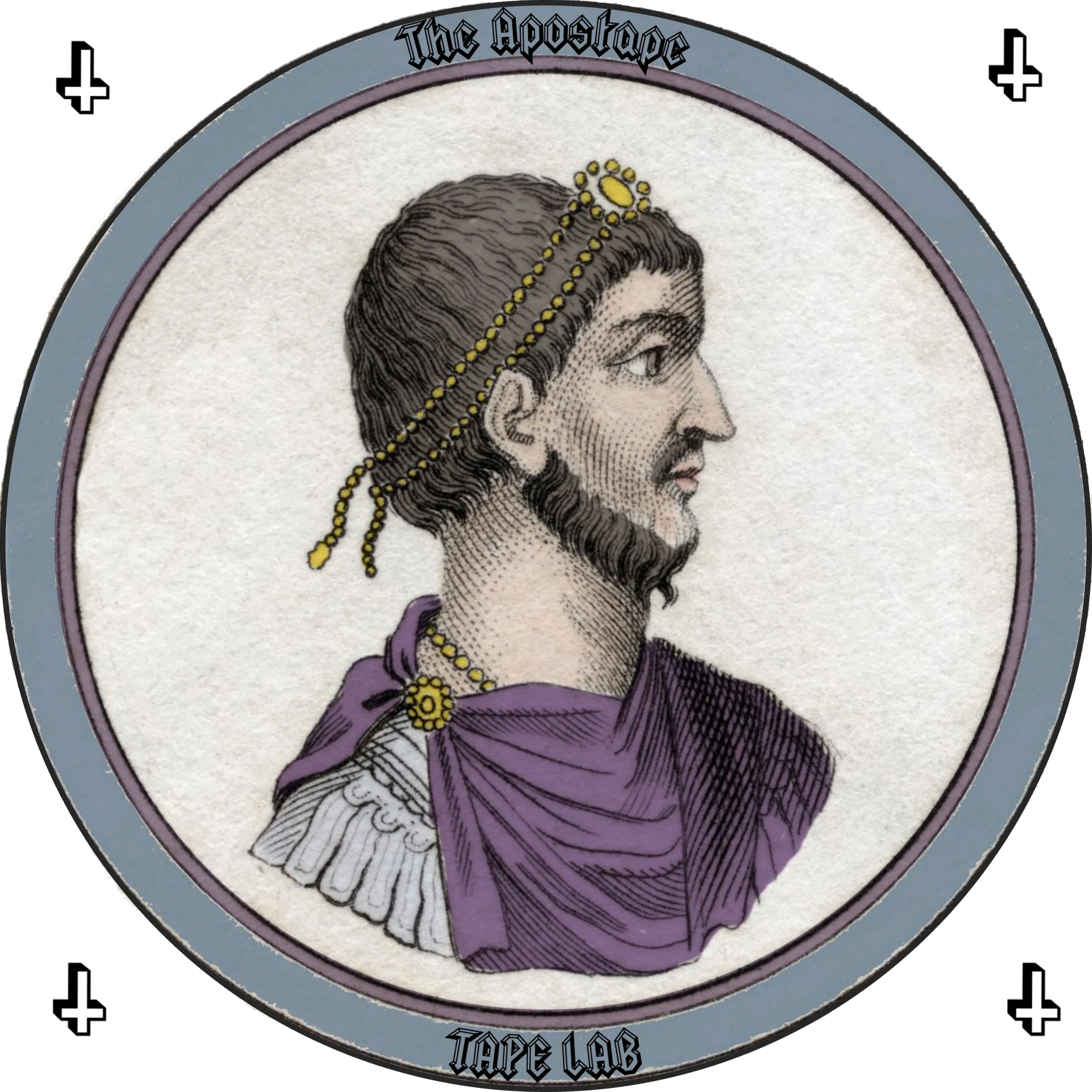
Tape Lab’s love for Julian the Apostate is shown in our new EP, The Apostape (OUT NOW )
Tape Lab’s The Apostape EP takes its name from Julian the Apostate, Rome’s last pagan emperor and one of history’s great ideological wrong-way drivers.
Emperor Julian was No Saint.
Julian, known to history as The Apostate, was born in 331 CE into a Roman world already shackled to the rising dominance of Christianity. Nephew to Constantine the so-called “Great,” he should’ve been another imperial pawn, molded by bishops, hemmed in by doctrine. Instead, he became a rebel—Rome’s last pagan emperor and one of its most fearless intellectuals.
That tension sits at the center of The Apostape: rebellion, lost traditions, spiritual static, and the strange romance of refusing the official story.
Raised Christian under duress—after most of his family was murdered during a political purge—Julian saw firsthand the hollow piety of an empire ruled by fear disguised as faith. When finally given space to breathe, in Athens and Asia Minor, he immersed himself in philosophy, poetry, and ancient ritual. He didn’t just read about the gods; he lived them. Where Christianity asked him to kneel, paganism demanded he stand up and engage—with nature, with beauty, with community.
When Julian finally became emperor in 361 CE, he didn’t waste time with polite toleration. He called Christianity what it was: a morbid death cult that feared the body, stifled imagination, and demanded passive obedience over individual thought. He wrote, “You have filled the world with tombs and corpses, and yet you claim you bring life.” He saw the Church’s power not as spiritual, but as bureaucratic—a machine fattening itself on conformity.
He worked to breathe life back into the bones of Rome, reopening temples, reinstating ancient festivals, and funding a revival of the Hellenic spirit. He wasn't content to just criticize; he built. His vision of paganism wasn’t nostalgic—it was defiant, dynamic, tactile. It called on citizens to know the land they lived on, to honor the gods through action, to see beauty not as vanity, but as a bridge between humans and the divine.
Julian didn’t hide behind altars. He led his troops into battle against the Germanic tribes and later Persia. He bled with them. And when he died in 363 CE—wounded in battle during a bold but doomed campaign—he left behind a legacy that terrified the Church. They feared his ideas more than his army. Because he proved that resistance was possible. That belief could be radical, rooted in the Earth, not floating in heaven.
Julian was no saint.
For More
Britannica: “Julian” — Julian’s biography, reign, conversion to paganism, and reputation as “the Apostate.”
Livius: “Julian the Apostate” — Useful for timeline details, imperial context, and his death in 363 during the Persian campaign.
Loeb Classical Library: Against the Galilaeans — A strong primary-source reference for Julian’s anti-Christian writings.
Tertullian.org: Julian Against the Galileans — Accessible English translation of Julian’s critique of Christianity, useful for readers who want the source text.
EBSCO Research Starters: “Julian’s Pagan Revival” — Helpful overview of Julian’s attempt to reinstate pagan religious practices during his reign.
